

Expanding an iGaming business into a new regulated market is rarely as simple as obtaining a new license.
Every jurisdiction comes with its own regulatory expectations, technical requirements, security controls, and operational considerations. An infrastructure architecture that works well in one market may require significant changes before it can support another.
For growing iGaming operators, this creates an important infrastructure question:
Should every new market require a new cloud environment-or should the underlying architecture be designed to adapt?
A regulator-ready approach focuses on building a secure, governed, and scalable cloud foundation that can accommodate market-specific requirements without forcing operators to rebuild their infrastructure from the ground up.
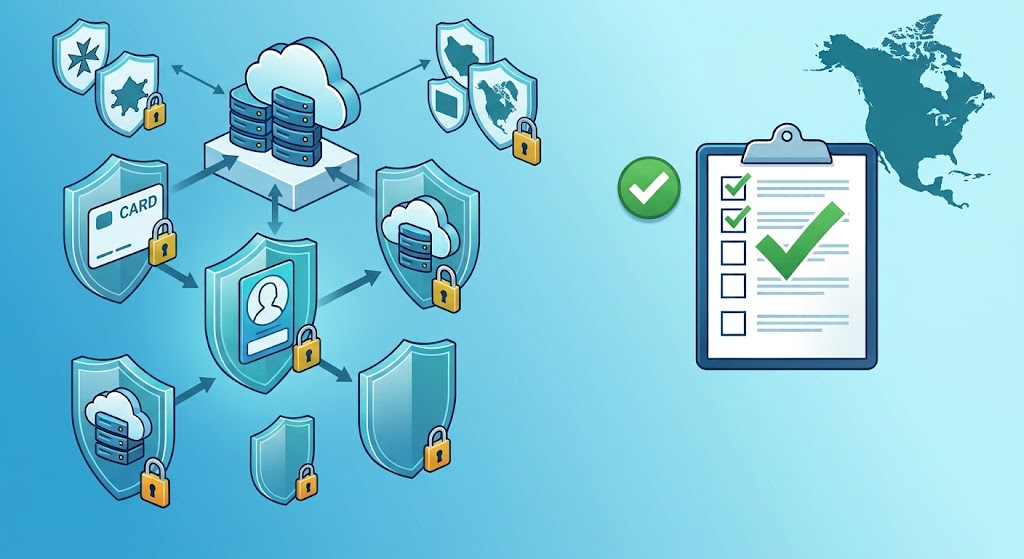
The Challenge of Operating Across Multiple Regulatory Markets
The iGaming industry is increasingly global. Operators may establish their initial infrastructure in a European jurisdiction and later expand into additional markets across North America or other regions.
The regulatory landscape, however, is not uniform.
In Europe, operators may need to consider requirements associated with authorities such as the Malta Gaming Authority (MGA). In North America, regulatory frameworks and licensing requirements can vary significantly between jurisdictions.
For example, operators entering Canadian or U.S. markets may need to address requirements specific to the relevant province, state, or regulatory authority.
This creates a complex infrastructure environment where companies must balance:
- Market-specific regulatory requirements
- Data protection and privacy obligations
- PCI DSS requirements for payment environments
- Security and access controls
- Auditability and reporting
- High availability and resilience
The challenge is not simply complying with each regulation individually. It is creating an infrastructure strategy that can support these differences without becoming fragmented.
Regulator-Specific Infrastructure Creates Technical Debt
Building infrastructure specifically around one regulator can make sense during an initial market launch.
The problem appears when the business starts expanding.
A new market may require:
- Different data residency considerations
- Additional monitoring or reporting
- New access controls
- Changes to network architecture
- Additional segmentation
- Different operational procedures
If the original environment was designed only around one regulatory framework, adapting it can involve significant rework.
Over time, operators can end up managing multiple versions of essentially the same infrastructure—with different configurations, security controls, deployment processes, and governance models.
This increases operational complexity and makes it harder to maintain a consistent security posture.
What Does “Regulator-Ready” Infrastructure Mean?
Regulator-ready does not mean building one generic environment and assuming that every jurisdiction has identical requirements.
Instead, it means creating a flexible cloud foundation where common security and governance controls are standardized, while market-specific requirements can be layered on top.
A regulator-ready environment typically includes:
- Strong identity and access management
- Network segmentation
- Centralized logging and monitoring
- Infrastructure as Code
- Security guardrails
- Automated configuration management
- Vulnerability management
- Controlled CI/CD pipelines
- Documented governance processes
This creates a consistent baseline while leaving room for jurisdiction-specific requirements.
Building on a Secure Cloud Foundation
Cloud Landing Zones can play an important role in this model.
A well-designed Landing Zone establishes foundational capabilities such as account or subscription structure, identity management, networking, logging, security policies, and governance controls.
For iGaming companies operating across multiple markets, this provides a repeatable starting point.
Instead of creating every environment from scratch, teams can deploy a standardized foundation and then apply the additional controls required by the target jurisdiction.
This approach can also improve deployment speed. With the right architecture and automation in place, production-ready environments can be prepared in under a week rather than requiring lengthy infrastructure projects for every market entry.
Security Controls Should Travel With the Platform
Regulatory requirements may differ, but many security principles remain consistent.
Whether an operator is preparing an environment for an MGA-regulated operation or expanding into a North American market, core security practices remain essential.
These can include:
- Least-privilege access
- Multi-factor authentication
- Encryption
- Centralized security logging
- Network isolation
- Vulnerability management
- Incident detection and response
- DDoS protection
- Continuous monitoring
Standardizing these controls across environments makes it easier to maintain a consistent security posture as the business grows.
It also reduces the risk that a new market launch introduces security gaps simply because the infrastructure was built under time pressure.
Compliance Frameworks Can Strengthen the Foundation
iGaming operators often need to work with multiple frameworks and certifications beyond gaming-specific requirements.
Depending on the business model and infrastructure, this can include MGA requirements, PCI DSS, ISO 27001, and SOC 2.
These frameworks overlap in several areas, particularly around access management, security monitoring, risk management, incident response, and governance.
Designing infrastructure around these common security principles can therefore create a stronger foundation for future market expansion.
The goal is not to claim that one certification automatically satisfies another. Instead, organizations can identify common controls and build them into their architecture from the beginning.
DevSecOps Keeps Infrastructure Ready as the Business Changes
A regulator-ready architecture is only valuable if it remains secure as the platform evolves.
iGaming platforms change continuously. Applications are updated, infrastructure scales, new integrations are introduced, and new markets are added.
DevSecOps practices help bring security and compliance considerations into these development and deployment processes.
Automated security checks, infrastructure scanning, policy enforcement, vulnerability management, and controlled CI/CD pipelines can help organizations identify issues earlier and maintain consistent security standards.
This reduces dependence on manual reviews immediately before audits or market launches.
Organizations such as ITGix help highly regulated iGaming companies integrate these practices into their cloud environments, combining cloud architecture, security, governance, and DevSecOps principles to support both regulatory requirements and faster delivery.
From One Market to the Next
The most scalable iGaming infrastructure strategy is not one that tries to predict every regulation a company will ever encounter.
It is one that establishes a strong, secure, and adaptable foundation.
By standardizing common cloud controls and treating jurisdiction-specific requirements as configurable layers, operators can reduce infrastructure duplication, accelerate market entry, and maintain greater consistency across their environments.
This becomes increasingly important as iGaming companies expand from established European markets into North America and other regulated jurisdictions.
Regulatory Flexibility Starts With Architecture
Regulations will continue to change. New markets will introduce new requirements, and existing jurisdictions will update their expectations.
Infrastructure should be able to evolve with them.
A regulator-ready approach gives iGaming operators a foundation that is secure, scalable, governed, and adaptable-without tying the entire architecture to a single regulator or market.
For operators planning international expansion, that flexibility can become a significant competitive advantage.
Build for the Next Market, Not Just the Current One
Entering a new iGaming market shouldn’t require rebuilding your cloud infrastructure from scratch.
Explore how ITGix helps highly regulated iGaming companies design secure, scalable, and compliance-aligned cloud environments that can adapt to different regulatory requirements-while supporting faster market entry, high-traffic workloads, and long-term growth.

